Strength training without testing is a leap of faith. You turn up, the weights go up a bit, and you assume something is happening. A benchmark closes that loop: a number you can write down today and beat in three months.
These five cover the qualities that matter most for running. None of them require a coach, and four of the five require almost no equipment. Do them fresh, not at the end of a session.
1. Single-leg sit-to-stand
Sit on a bench at roughly knee height. Stand up on one leg without using your hands and without the other foot touching the floor. Lower back down under control.
What it tells you: whether each leg can produce force independently. Running is a series of single-leg efforts; testing both legs together lets the stronger one hide the weaker one.
A reasonable target: five controlled repetitions per side, with no more than a rep or two of difference between legs. A large side-to-side gap is worth addressing before it becomes an injury.
2. Single-leg calf raise to failure
Stand on one foot, ball of the foot on a step, heel hanging. Rise to full height and lower under control. Count until you can no longer reach full range.
What it tells you: calf and Achilles endurance. The calf complex absorbs and returns an enormous amount of energy every stride, and it is where a lot of running injuries begin.
A reasonable target: twenty or more full-range repetitions per side. Most runners who have never trained calves specifically come in well under that, and most are surprised by it.
3. Romanian deadlift for load
A hinge pattern with a barbell or heavy dumbbells: hips back, spine neutral, bar close to the legs, lower to mid-shin, drive the hips forward. Work up to a heavy set of five.
What it tells you: posterior chain strength — hamstrings and glutes, which drive propulsion and control the leg on landing.
A reasonable target: rather than an absolute number, track the ratio to your bodyweight and aim to move it upward over a season. If you are new to lifting, the first target is simply five clean reps with a bar that feels genuinely heavy.
4. Side plank hold
Forearm and feet on the floor, hips stacked and lifted, body in a straight line. Hold until the hips drop.
What it tells you: lateral trunk and hip stability, which is what stops the pelvis dropping on each stride when you are tired.
A reasonable target: sixty seconds per side, and roughly equal between sides.
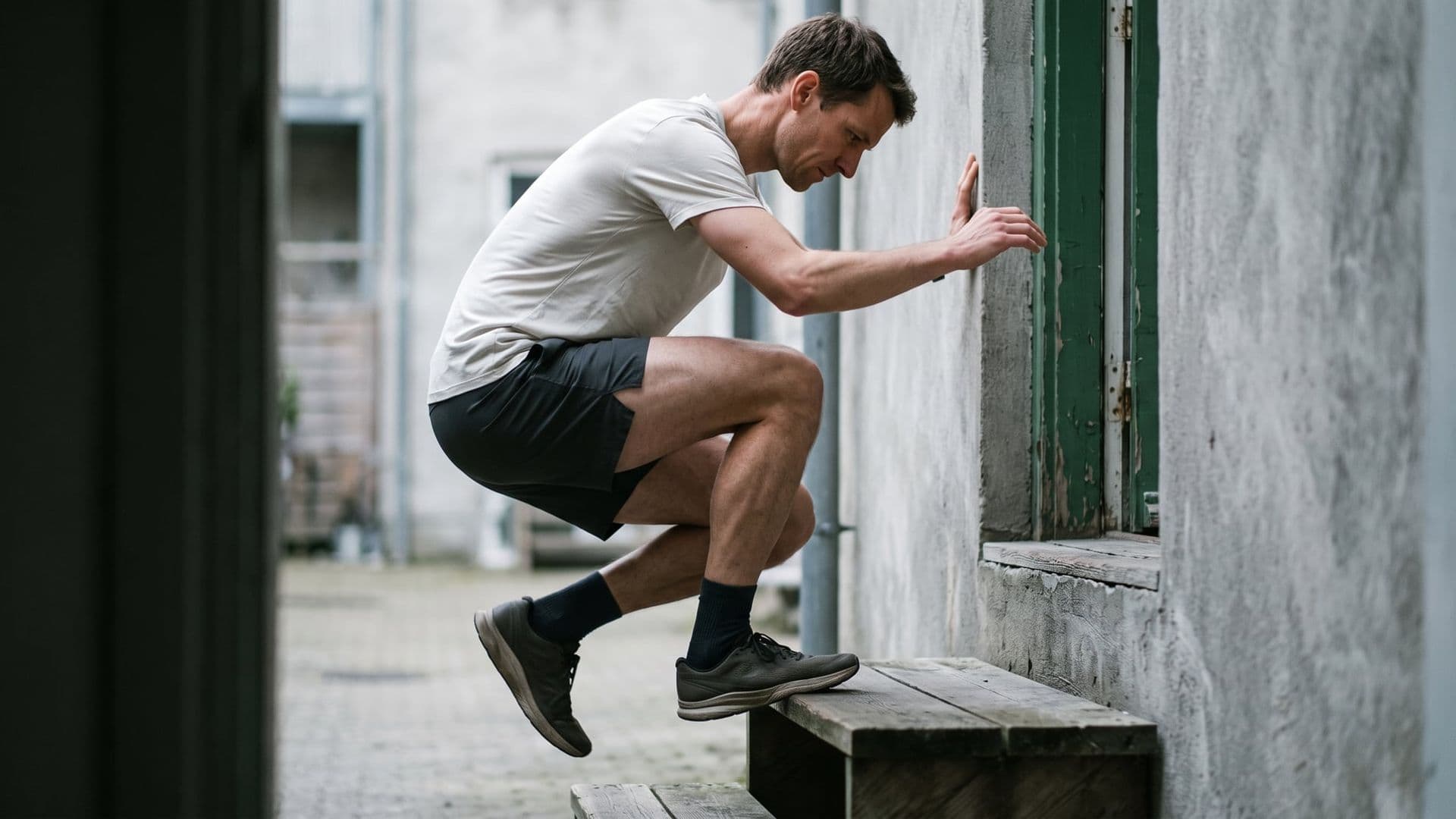
5. Weighted step-up
A box or bench at knee height. Step up leading with one leg, drive through the heel, control the descent. Add load with dumbbells.
What it tells you: it combines single-leg strength with the range of motion you actually use on hills and at pace.
A reasonable target: eight clean reps per side carrying half your bodyweight.
How to use these
- Test all five in one session, fresh, and write down every number.
- Train for eight to twelve weeks.
- Re-test in the same order, at the same time of day, in the same shoes.
- Compare. If nothing moved, the training needs changing — not the test.
A word on what these are not: they are not a ranking, and they are not a substitute for running fitness. A runner who scores well on all five and never runs is still not a good runner. They are a check that the strength half of your training is doing its job.