A 90-minute half marathon is a real achievement and tells you almost nothing about whether you can hang from a bar, carry something heavy, or hold a position under load. For most runners those are not idle questions — they are the qualities that determine whether the running keeps working over a decade.
Six tests. Do them fresh, in this order, with full recovery between each.
1. Maximum press-ups
Full range, chest to fist height, no pausing at the top. Stop when form breaks rather than when you fail. Useful marker: 20 for men, 12 for women, as a competent baseline rather than a standard.
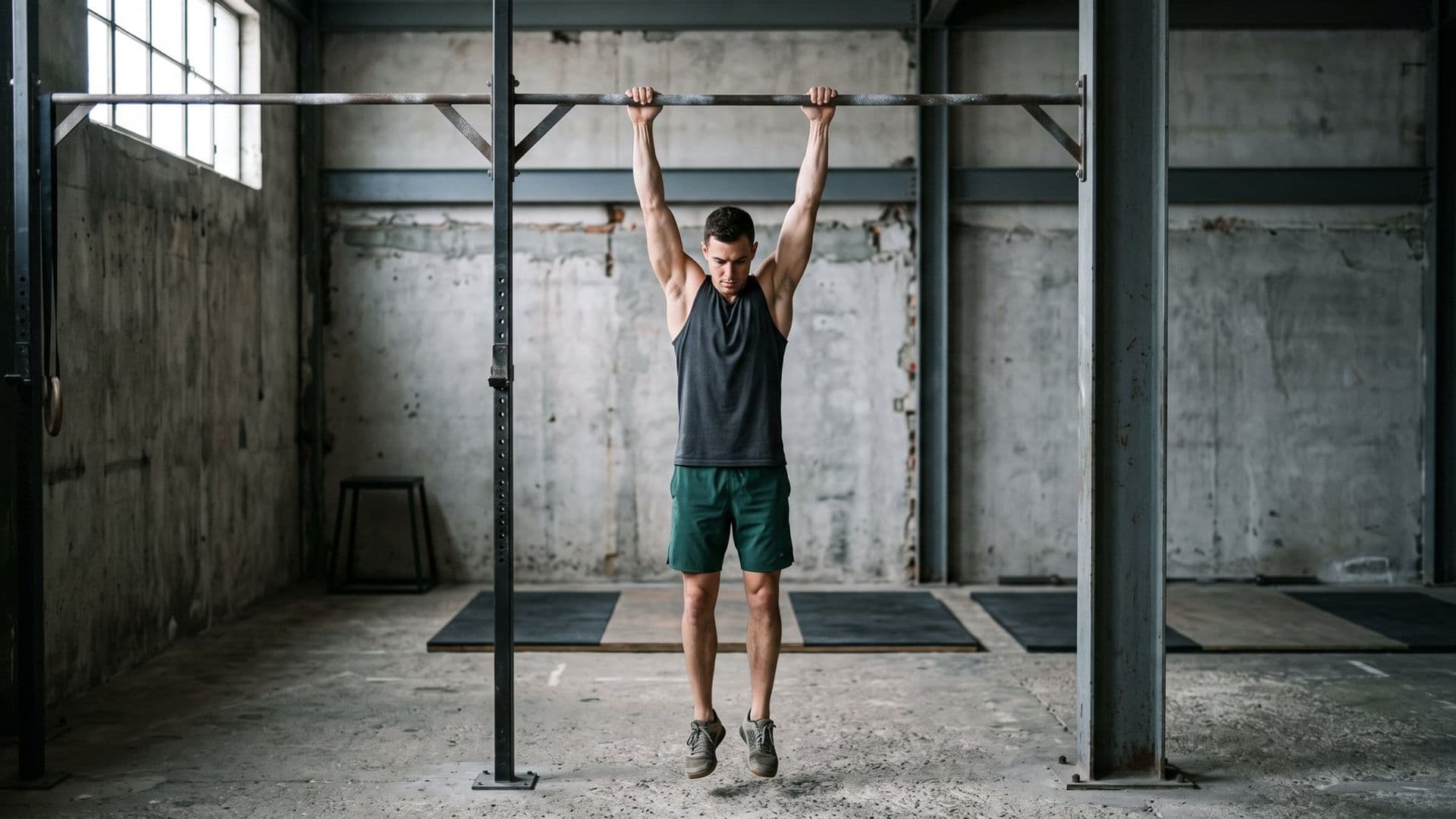
2. Maximum pull-ups
Dead hang to chin over the bar. If you cannot do one, record how long you can hang instead. Useful marker: any strict repetitions at all puts you ahead of most endurance athletes. This is the test that most often surprises people.
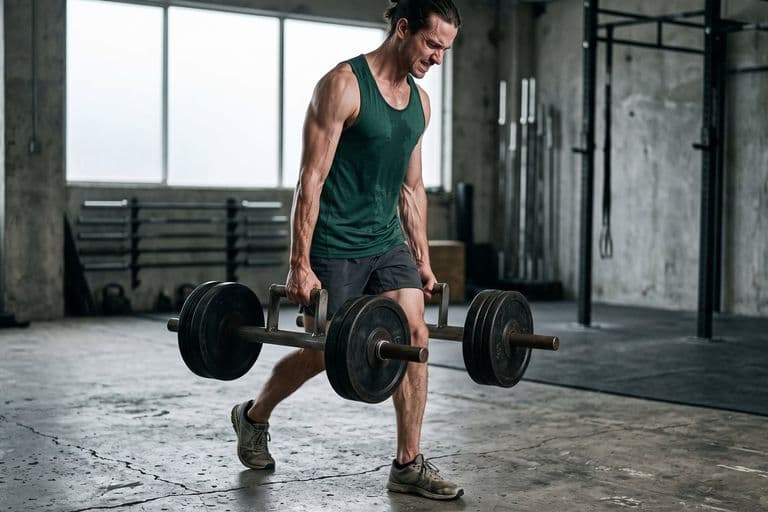
3. Farmer’s carry
Half your bodyweight in each hand, walk until your grip fails. Useful marker: 60 seconds. Grip strength is a decent proxy for whole-body strength and it is almost never trained by runners.
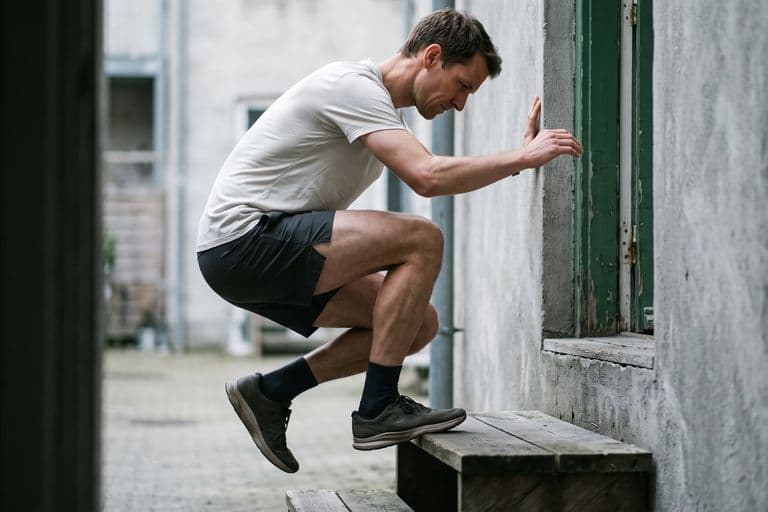
4. Single-leg calf raises
Full range, to failure, per side. Useful marker: 20 per side, roughly even. Covered in more detail in our strength benchmarks.
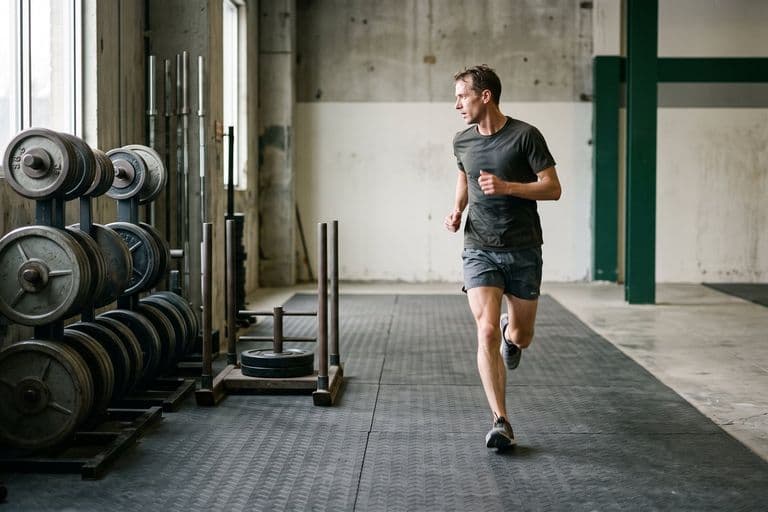
5. 500m row or 400m run, all out
An honest look at what a maximal short effort feels like. Runners generally do well here and it is worth knowing your number.
6. Two-minute burpee test
As many as possible in two minutes, chest to floor, jump at the top. Useful marker: 30. This is where aerobic fitness and whole-body coordination meet, and where a lot of specialised runners discover a gap.
Reading the results
Look for the outlier, not the average. Nearly everyone has one test that is dramatically worse than the others, and that test is your training plan for the next eight weeks. For runners it is usually pull-ups or the carry.
Write everything down, train the weakness, re-test in twelve weeks. If nothing moved, change the training rather than the test.